Open Today Sales: 9 AM-6 PM



Tahoe
Suburban
▶ Quick Answer
The short answer to the difference between Tahoe and Suburban is length. Suburban is stretched to give it noticeably more cargo room and third-row breathing space, while Tahoe keeps a shorter footprint that’s easier to park and maneuver. Beyond that, the two SUVs share engines, trims, and most of the technology inside.
Walk into Brinson Chevrolet in Kaufman, TX, and mention you’re SUV shopping, and there’s a good chance the conversation turns into Chevy Tahoe vs. Suburban before you’ve even sat down. Both wear the bowtie, both haul a crowd, and both look right at home on I-20 or a ranch road out back. So which one actually fits your life? It usually comes down to how much space you need behind that third row.
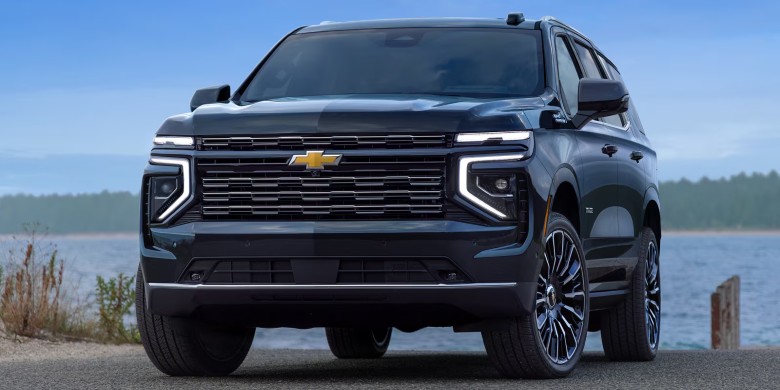
The short answer to the difference between Tahoe and Suburban is length. Suburban is stretched to give it noticeably more cargo room and third-row breathing space, while Tahoe keeps a shorter footprint that’s easier to park and maneuver. Beyond that, the two SUVs share engines, trims, and most of the technology inside.
That extra size is really the whole story behind the question “What is the difference between a Tahoe and a Suburban?” Both ride on GM’s full-size SUV platform, both come in LS, LT, RST, Z71, Premier, and High Country trims, and both offer the same trio of engines. What changes is how that platform gets stretched.
Suburban’s longer wheelbase means adults in the third row aren’t folding themselves in half, and there’s real cargo space left over even with all three rows in use.
Tahoe keeps things tighter, which some drivers actually prefer for daily errands, tight parking garages, or a driveway that wasn’t built with a 19-foot SUV in mind.
Neither one is the “wrong” choice — it’s about matching the vehicle to the driveway, the garage, and the way the family actually uses it week to week.
Where Tahoe and Suburban Are Basically Twins

Suburban is the bigger of the two by a solid margin, measuring 226.3 inches long compared to Tahoe’s 211.3 inches. That length advantage shows up almost entirely in cargo room and third-row space, not in width or height.
When people ask about Tahoe vs. Suburban size, they’re usually really asking about cargo space, because that’s where the two SUVs actually separate.
Suburban’s extra length yields a best-in-class 144.5 cubic feet of cargo volume, with 93.8 cubic feet behind the second row and 41.5 cubic feet behind the third row.
Tahoe still holds its own with 122.7 cubic feet of max cargo space — plenty for a family vacation, a Costco run, or moving day — but it’s noticeably tighter once the third row is up.
Height and width barely move between the two, so the difference shows up in the trunk, not in how the SUV looks parked on the lot. If a family regularly hauls luggage for six or seats nine with room to spare, Suburban’s extra footprint earns its keep fast.
Tahoe vs. Suburban at a Glance
| Factor | Chevy Tahoe | Chevy Suburban |
|---|---|---|
| Length | 211.3 in. | 226.3 in. (Tahoe vs. Suburban length gap: about 15 in.) |
| Max cargo volume | 122.7 cu. ft. | 144.5 cu. ft. |
| Height | 75.8–76.8 in. | 75.6–76.6 in. |
| Seating | Up to 9 | Up to 9 |
| Max towing | 8,400 lbs. | 8,200 lbs. |
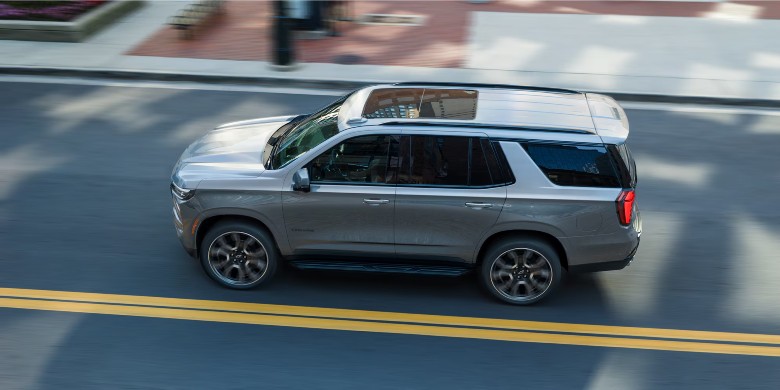
Tahoe suits drivers who want full-size capability without the extra length — think smaller families, tighter parking, or weekend towing. Suburban suits larger families, road-trippers, and anyone who regularly needs max cargo room with all three rows full.
The Chevy Suburban vs. Tahoe decision often comes down to how a family actually spends its weekends.
A Suburban makes sense for the family driving to Grandma’s house with three kids, a dog, and every bag packed to the ceiling, or for the crew hauling a boat and still wanting third-row seating on the way to the lake.
Tahoe fits the household that wants that same full-size confidence and towing muscle but doesn’t need the extra two feet of length in the garage or the parking lot.
Both handle Kaufman-area roads, trailering, and long highway stretches with the same available Super Cruise and trailering tech.* It really comes down to whether the extra cargo room behind the third row gets used every week or just a few times a year.

At the end of the day, Suburban vs Tahoe isn’t about one SUV beating the other — it’s about which footprint matches how a family actually lives. Both deliver the same dependable engines, the same tech, and the same full-size Chevy toughness that’s kept these nameplates on the road for decades. The team at Brinson Chevrolet in Kaufman, TX walks shoppers through both side by side every week, so nobody has to guess which one fits. Whether the plan is a Chevy Tahoe near Kaufman, TX for easier daily driving or a Suburban for maximum room on road trips, the right fit is usually pretty obvious once you sit in both.
The best way to settle a Tahoe vs. Suburban debate is to sit in both and load up the trunk. Stop by Brinson Chevrolet in Kaufman, TX, to compare them side by side, or browse “Chevy Suburban for sale near me” listings online before heading in for a test drive.
See the size, cargo room, and third-row space side by side. Brinson Chevrolet in Kaufman, TX keeps both full-size SUVs in stock for a true back-to-back test drive.
Length and cargo space. Suburban is about 15 inches longer than the Tahoe, which adds up to more room behind the third row.
Suburban is bigger in every length and cargo measurement, though the two are nearly identical in width and height.
Suburban measures 226.3 inches to Tahoe’s 211.3 inches — a difference of about 15 inches.
Yes. Suburban offers 144.5 cubic feet of max cargo volume compared to Tahoe’s 122.7 cubic feet.
Yes. Both offer a 5.3L V8, a 6.2L V8, and a 3.0L Duramax Turbo Diesel.
Tahoe has a slight edge, with a maximum towing capacity of 8,400 lbs. compared to the Suburban’s 8,200 lbs.
Yes. Both ride on GM’s full-size SUV platform and share the same trim lineup, engines, and most interior technology — Suburban is simply a stretched version of that platform.
Suburban starts a bit higher, with a base MSRP of $63,700, compared to Tahoe’s $60,700.
It depends on how the SUV gets used. If a family regularly needs maximum cargo space or extra third-row space, the added cost is usually worth it; if not, the Tahoe delivers nearly the same experience for less.
Suburban is the better fit for larger families, thanks to its extra length, more third-row legroom, and greater cargo volume with all three rows in use.
Yes. Brinson Chevrolet in Kaufman, TX keeps both models in stock, so shoppers can drive each one back-to-back before deciding.
Chevrolet Tahoe and Suburban information, pricing, and specifications sourced from chevrolet.com/suvs/tahoe and chevrolet.com/suvs/suburban.
*The Manufacturer’s Suggested Retail Price excludes destination freight charge, tax, title, license, dealer fees and optional equipment. Click here to see all Chevrolet vehicles’ destination freight charges. Dealer sets the final price.
*Towing figures require a properly equipped vehicle. See dealer for details on required packages and equipment.
*Safety or driver assistance features are no substitute for the driver’s responsibility to operate the vehicle in a safe manner. The driver should remain attentive to traffic, surroundings and road conditions at all times. Visibility, weather and road conditions may affect feature performance. Read the vehicle Owner’s Manual for more important feature limitations and information.

